

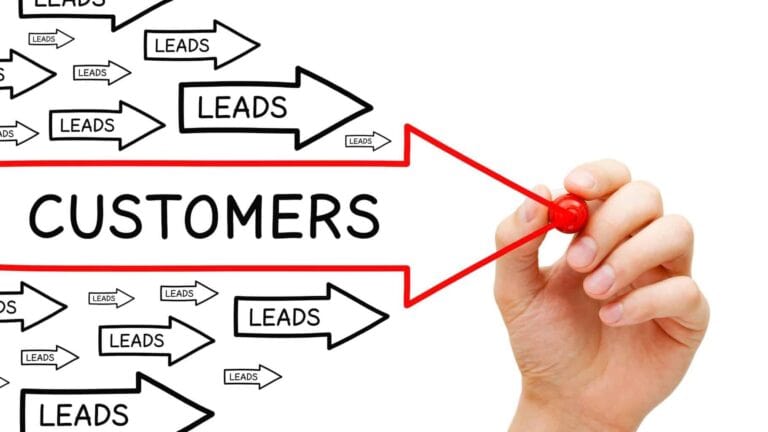
Most of you already know that conversion rate optimization (CRO) is the systematic process of increasing the percentage of website visitors who take a desired action — whether completing a form, becoming customers, or other specific goals.
When assessing CRO on a client’s website, several key elements need evaluation. Here are some relevant questions you can ask as you’re performing the assessment.
Unique Selling Proposition (USP)
The USP should clearly articulate how the client’s product or service solves their customers’ needs better than competitors.
Assessment Questions:
· Is there a clear, specific USP statement above the fold?
· Does the USP messaging remain consistent throughout the page?
· Are there explicit differentiators that showcase competitive advantages?
Primary Call To Action (CTA)
Every website needs at least one effective CTA in a prominent location.
Assessment Questions:
· Is there a prominent, visually distinct primary CTA button above the fold?
· Are primary CTAs repeated at logical intervals throughout the page?
· Does the CTA copy use clear, action-oriented language?
Secondary Call To Action (CTA)
Secondary CTAs engage visitors who aren’t ready for the primary action or need additional information.
Assessment Questions:
· Are there secondary CTAs like “Learn More” or “Discover Our Process”?
· Is there a newsletter signup or other lead capture opportunity?
· Do secondary CTAs have distinct but less prominent styling?
Relevant Trust Factors
Trust factors establish credibility through awards, affiliations, certifications, and guarantees.
Assessment Questions:
· Are relevant trust badges displayed near CTAs and product sections?
· Are industry partnerships and community affiliations highlighted?
· Are awards or recognition featured near conversion points?
Testimonials / Reviews
Social proof through customer feedback is crucial for building trust.
Assessment Questions:
· Are customer testimonials with quotes and images placed near CTAs?
· Is specific feedback about quality and service highlighted?
· Are testimonial excerpts integrated as visual elements throughout the page?
Noticeable Phone Number
Contact information should be easily accessible.
Assessment Questions:
· Is the phone number prominently displayed in the header or top navigation?
· Does the contact information remain visible across all main pages?
· Can visitors access contact information at any scroll depth?
Lead Capture Forms
Forms should facilitate easy information collection from potential customers.
Assessment Questions:
· Are lead capture forms positioned in prominent locations?
· Is there a clear value proposition for form submission?
· Has form field input been minimized to reduce friction?
· Are forms strategically positioned near primary CTAs or content sections?
Regular assessment using these criteria will help maintain and improve conversion rates effectively. However, there are exceptions to this list.
Exceptions to the Rules
While the USP and CTA are considered necessary on EVERY site for adequate conversion, in some cases, a website might be an exception and you might elect to omit them from your assessment. Here are some examples. Each of these exceptions assumes that:
· The exclusion aligns with the website’s primary purpose
· The omission doesn’t negatively impact the user experience
· The decision is backed by user behavior data or clear business logic
Secondary Call To Action (CTA)
· Single-purpose landing pages for time-sensitive offers (e.g., event registration deadlines)
· Checkout pages where additional options might distract from completing the purchase
Relevant Trust Factors
· Government or official municipal websites where authority is inherently established
· Monopoly utility service providers where customers don’t have alternative options
Testimonials / Reviews
· Internal corporate intranets or employee portals
· Emergency service websites where immediate action is required rather than social proof (e.g., emergency medical services, crisis hotlines)
Noticeable Phone Number
· Digital-only products with automated delivery (e.g., downloadable software, digital art)
· Self-service platforms designed for complete automation (e.g., stock photo websites, online learning platforms with pre-recorded content)
Lead Capture Forms
· Informational websites where the sole purpose is to provide public information (e.g., weather forecasts, public transit schedules)
· Simple digital tools or calculators designed for one-time use without need for follow-up
Agencies should carefully consider these exceptions during CRO assessment, as they may indicate opportunities to streamline rather than deficiencies requiring correction.
Making it Easy
Clearly, a Conversion Optimization assessment can take a LOT of time but it one of the most important services we can provide our clients beyond just building their website. If this seems like a lot of work to you but you still want to perform these types of assessments for your clients, y’all know I recommend My Web Audit because their new AI-Powered web audit is AMAZING!
What would normally take hours… or days,,, is done in less than 5 minutes! On a 5-star scale, My Web Audit gets 10 stars from me!